






















RADIOLOGY
AI applied to breast pathology screening and assessment.
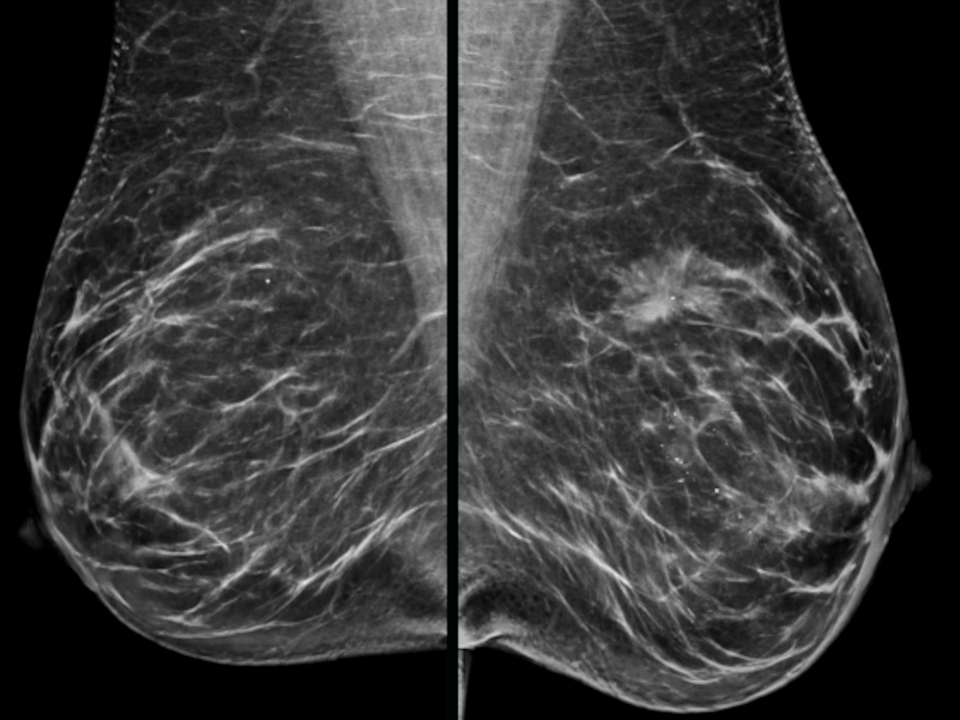
Developed in collaboration with the Basque Health Service Osakidetza and the Biodonostia Institute, quantusMM analyzes mammographic images to identify nodules and microcalcifications and categorize findings according to their probability of malignancy.

DESCRIPTION
quantusMM is a test for the detection of malignant nodules and microcalcifications based on the automatic analysis of a mammogram.
quantusMM is a software medical device (MDSW) designed for use by radiologists and other healthcare professionals to provide a prediction (expressed through a class system) of the presence of malignant nodules and microcalcifications. The device provides medical information to support decision-making related to the identification and management of patients at risk of breast cancer.
The device has been designed as a tool to support clinicians, especially in mass screening processes for patients with risk factors, in the early detection of breast pathologies, and in prioritizing waiting lists.
USE CASES

CU-MM-01: Mass Breast Cancer Screening in Public Health Programs
In breast cancer screening programs, quantusMM automatically analyzes mammograms and classifies risk according to the BI-RADS scale in under 2 minutes, allowing the radiologist to prioritize the review of cases with a higher probability of malignancy and optimize workflow.
CU-MM-02: Automatic Second Reading in Hospitals
In hospital breast units, quantusMM can be used as a second reading system for mammograms, identifying cases where there is a discrepancy between the algorithm and the radiologist for review by a second specialist, reinforcing diagnostic safety.
CU-MM-03: Prioritization of Waiting Lists in Oncology Emergencies
In breast units with high patient loads, quantusMM automatically analyzes mammograms pending review and prioritizes the work list according to risk level, ensuring that cases with a higher probability of malignancy are evaluated more quickly.
CU-MM-04: Expansion into Emerging Markets with Limited Access to Specialists
In hospitals with a shortage of specialized radiologists, quantusMM can be used as a screening support tool, performing the initial analysis of mammograms and facilitating the referral of suspicious cases for review by specialists, expanding access to quality diagnosis.

CLINICAL EVIDENCE
Prediction and location of malignant nodules and microcalcifications in mammograms using Deep Learning (quantusMM)
The study used 3,114 mammograms from 976 patients, from Onkologikoa, Kutxa Oncology Institute.
The tool consists of a prior preprocessing step and two independent modules: one that detects malignant nodules and another that detects malignant microcalcifications, both based on quantitative analysis of the breast image texture. The steps are:
The system classifies each mammogram into five malignancy classes, from Class 1 (higher sensitivity and therefore lower probability of malignancy) to Class 5 (higher specificity and therefore higher probability of malignancy). This classification is established through a series of decision thresholds, each associated with specific values of sensitivity, specificity, positive predictive value (PPV), and negative predictive value (NPV), as shown in the following tables.
| NODULE THRESHOLD | Sensitivity | Specificity | PPV * | NPV * |
|---|---|---|---|---|
| Class 4-5 | 37% | 99% | 99% | 62% |
| Class 3-4 | 65% | 95% | 92% | 73% |
| Class 2-3 | 95% | 51% | 65% | 91% |
| Class 1-2 | 99% | 23% | 56% | 95% |
| MICROCALCIFICATION THRESHOLD | Sensitivity | Specificity | PPV * | NPV * |
|---|---|---|---|---|
| Class 4-5 | 42% | 99% | 99% | 73% |
| Class 3-4 | 66% | 95% | 89% | 81% |
| Class 2-3 | 95% | 52% | 56% | 94% |
| Class 1-2 | 99% | 3% | 39% | 89% |
* PPV and NPV: Positive Predictive Value and Negative Predictive Value

SOLUTION INTEGRATION
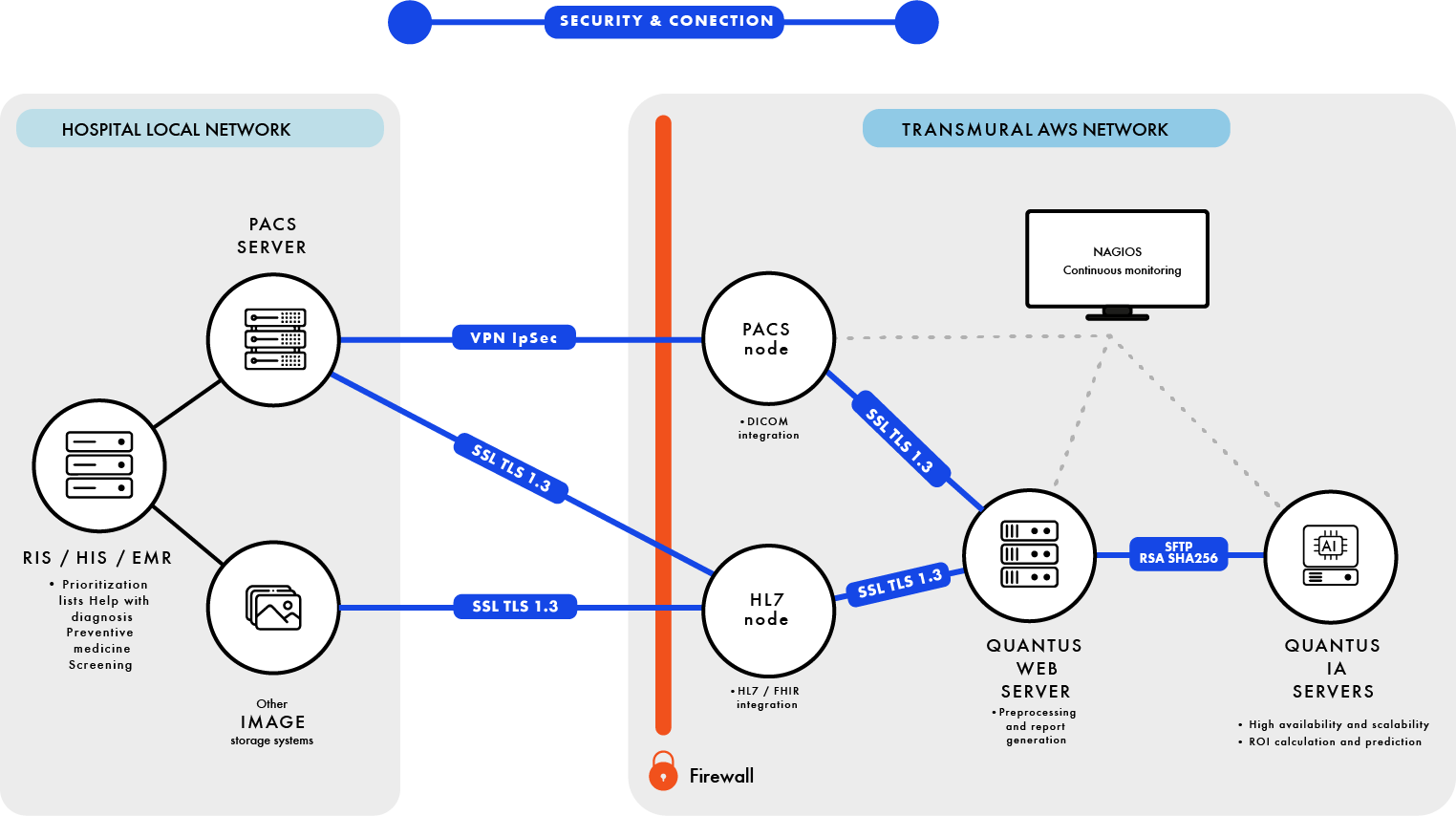
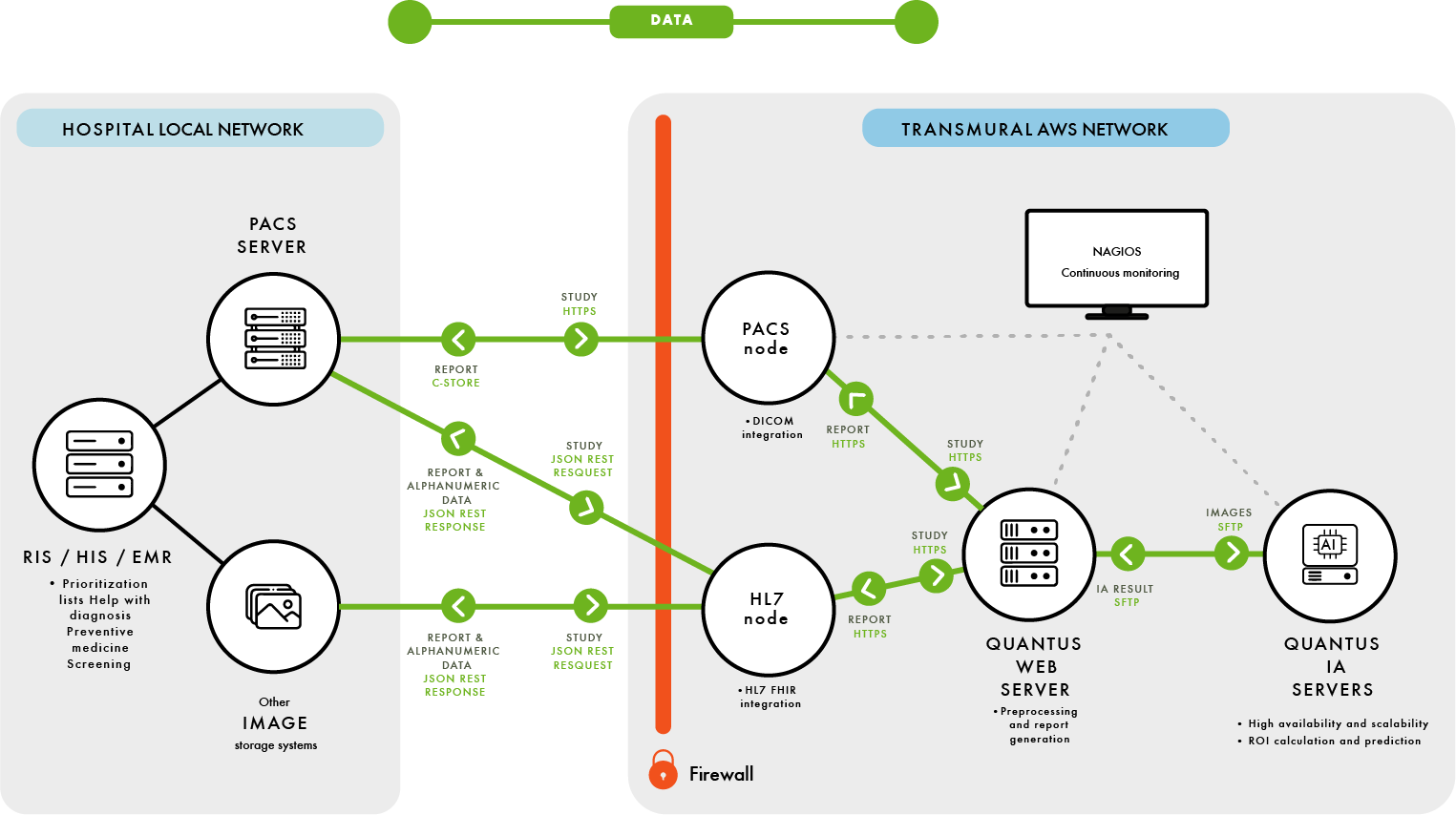
- Our products allow integration with client systems through the DICOM protocol and the HL7 FHIR interface
- We ensure data privacy in SaaS installations by establishing IPsec VPNs with our clients.
- All communications outside the client environment are secured with SSL TLS 1.3

LICENSING BY NUMBER OF TESTS
LICENSING BY ANALYSES PERFORMED
CUSTOM OFFERS


